
 NEW LAUNCH
 HIP BAGS
 SLING BAGS
 HAND BAGS
 TOTE BAGS
 CLUTCHES
 SLEEVES & ACCESSORIES
Leather Patina Guide: Why Vintage Belt Bags Look Better With Age

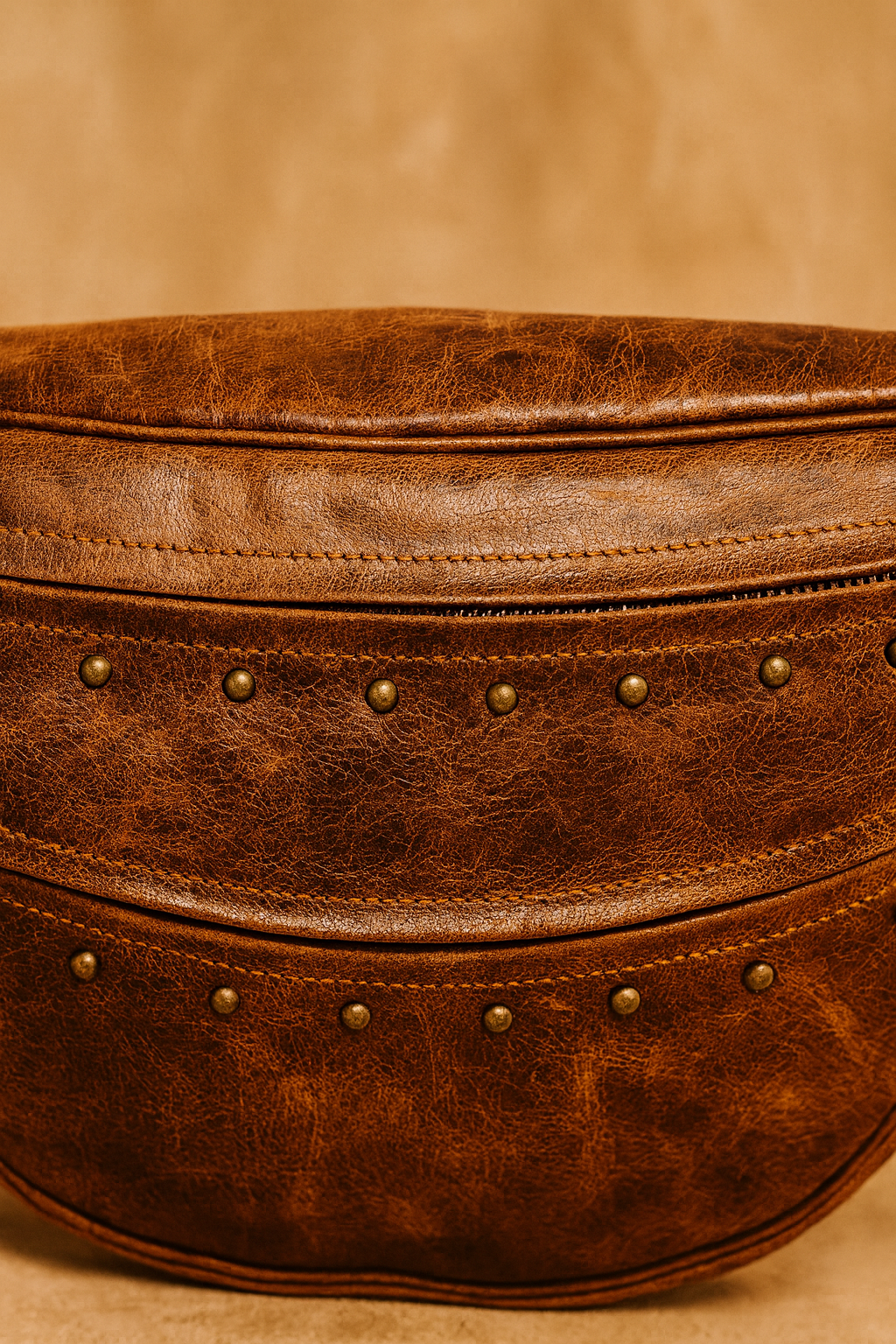
Introduction: In Defence of Imperfection
In a world obsessed with pristine, Instagram-perfect aesthetics, there’s something refreshingly authentic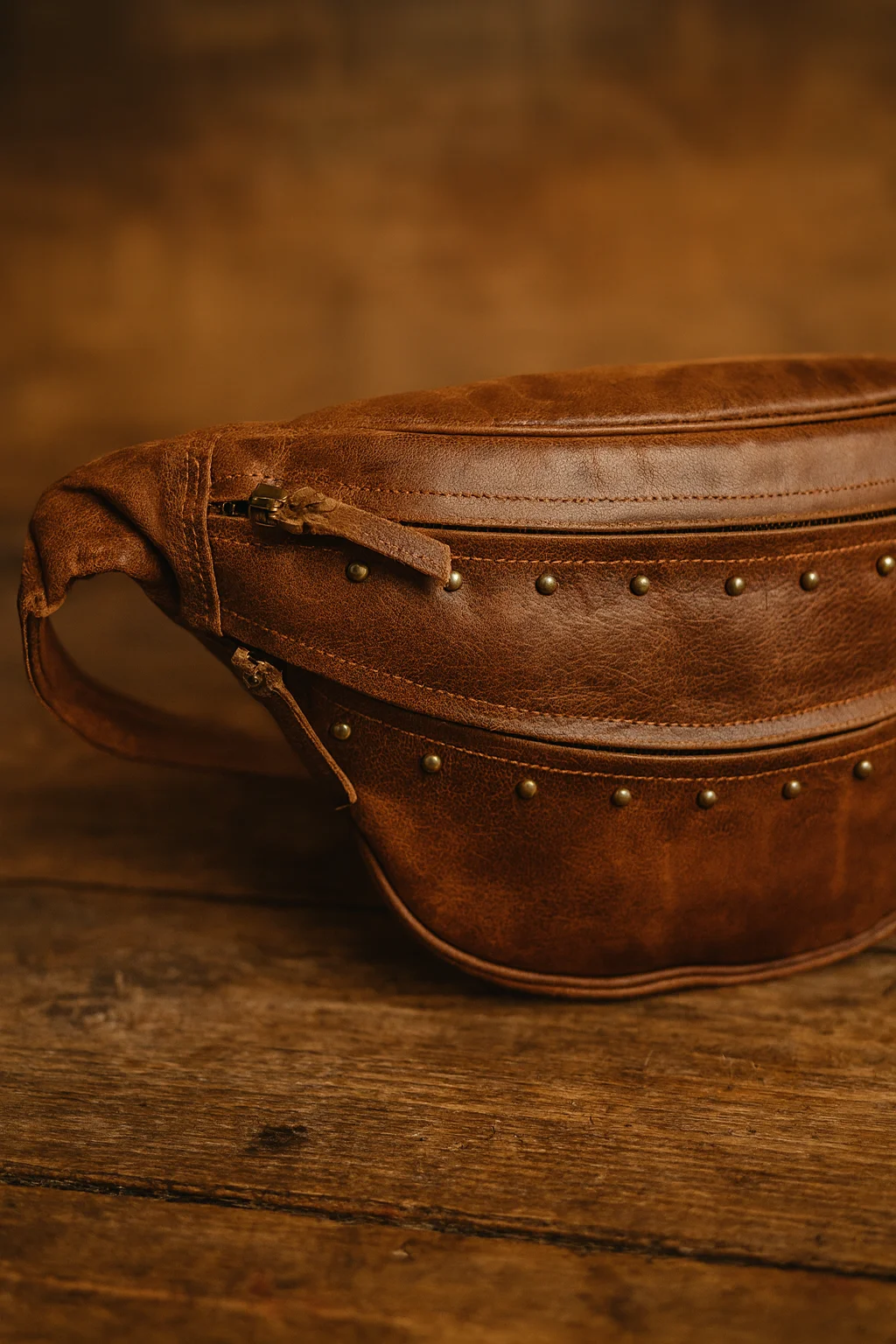 about a well-worn leather belt bag—one that shows the honest marks of real life. Those scratches you’re worried about? They’re not flaws. That darkening around the edges? It’s not damage. The soft, weathered texture developing over time? That’s not wear and tear.
It’s patina. It’s character. It’s beauty.
And it’s exactly what makes vintage leather so coveted, valuable, and utterly irreplaceable.
If you’ve ever looked at your leather waist bag and thought, “Is this scratch ruining it?” or “Should I be concerned about these marks?”—this article is for you. We’re about to completely change how you see your leather goods, transforming anxiety about “damage” into appreciation for authentic character development.
Because here’s the truth luxury brands don’t always advertise: The best leather doesn’t look its best when it’s new. It looks its best after years of life.
What is Leather Patina? Understanding the Glow
The Science Behind the Beauty
Patina (pronounced puh-TEE-nuh) refers to the change in appearance that leather undergoes through use, exposure, and time. It’s not damage—it’s transformation.
 What Happens Chemically:
When you use a genuine leather belt bag, hip bag, or bum bag regularly, several natural processes occur:
1. Oil Absorption
- Your skin’s natural oils transfer to the leather
- These oils darken and soften the leather gradually
- High-contact areas (where you touch most) develop richer color
- The leather becomes more supple and comfortable
2. UV Exposure
- Sunlight affects leather’s color molecules
- Some leathers lighten slightly; others deepen
- Creates subtle color variations across the surface
- Adds warmth and depth to the overall tone
3. Oxidation
- Leather reacts with oxygen in the air
- Similar to how copper develops a greenish patina
- Causes gradual color enrichment
- Natural tannins develop deeper, more complex hues
4. Compression and Movement
- Areas that flex and bend develop creases
- These creases create visual texture and depth
- Compression areas become slightly darker
- Movement patterns become part of the design
The Result: A unique finish that couldn’t be replicated artificially—a finish that tells your specific story.
The Difference Between Damage and Patina
Not All Marks Are Created Equal
This is crucial: there’s a significant difference between damage that should concern you and character development that should be celebrated.
Desirable Patina (Celebrate This):
✓ Color Darkening: Especially around edges, handles, and high-contact areas ✓ Soft Scratches: Surface-level marks that don’t penetrate through the leather ✓ Natural Creasing: Fold lines where the bag flexes during use ✓ Subtle Scuff Marks: Light surface disturbances that blend into the overall patina ✓ Color Variation: Gradual shading differences across the surface ✓ Grain Exposure: Natural leather texture becoming more pronounced ✓ Soft Wear Patterns: Areas that look “lived in” but not damaged
Actual Damage (Address This):
✗ Deep Cuts or Tears: Penetrating through leather layers ✗ Mold Growth: Green or white fuzzy spots (from moisture damage) ✗ Cracking/Flaking: Leather breaking apart or peeling (usually from drying out) ✗ Severe Stains: Deep discoloration from chemicals or dyes ✗ Hardware Failure: Broken zippers, torn strap attachments ✗ Structural Issues: Seams pulling apart, bag losing shape ✗ Water Damage: Warping, stiffening, or permanent discoloration
The Key Question: Does it affect function or structural integrity? If no, it’s probably desirable character development.
Why Vintage Leather is More Valuable
The Economics of Authenticity
Here’s something that surprises many people: well-aged leather goods often sell for MORE than identical new items—sometimes significantly more.
Why Patina Adds Value:
 1. Proof of Quality
- Only genuine, high-quality leather develops beautiful patina
- Bonded leather and cheap synthetics simply deteriorate
- If it ages beautifully, it was quality to begin with
- Patina is verification of authenticity
2. Time Investment
- True patina takes years, sometimes decades, to develop
- You can’t rush authentic aging
- This time investment has inherent value
- New owners inherit years of “breaking in”
3. Uniqueness
- No two patina patterns are identical
- Your usage creates one-of-a-kind coloring
- Vintage pieces are literally irreplaceable
- Uniqueness commands premium prices
4. Story and Provenance
- Well-worn leather has history
- Each mark represents an experience
- Collectors value items with “stories”
- Authentication of use over time
Market Examples:
- Vintage leather waist bags in good condition sell for 50-200% more than new equivalents
- Designer belt bags with natural patina command significant premiums
- “Pre-aged” or “distressed” leather is artificially created to mimic natural patina (and often fails)
- Luxury brands now market “lived-in” aesthetics specifically
The Irony: Manufacturers try to artificially create what happens naturally to quality leather over time—and customers can tell the difference.
The Aesthetics: Why “Rugged” is Beautiful
Embracing the Vintage Aesthetic
Modern fashion has rediscovered what craftspeople have always known: imperfection is interesting. Uniformity is boring.
The Appeal of Rugged Leather:
Visual Depth:
- Patina creates dimensional color rather than flat uniformity
- Light and shadow play across varied surfaces
- Multiple tones add visual interest
- Three-dimensional texture develops
Authenticity Signals:
- Clearly handmade and genuine
- Tells immediately that it’s real leather, not synthetic
- Communicates quality and longevity
- Suggests owner values substance over superficial perfection
Fashion Forward:
- Vintage aesthetic is currently highly desired
- “Perfectly imperfect” is a design principle
- Rugged look pairs with both casual and refined styles
- Timeless appeal that transcends temporary trends
Masculinity and Femininity:
- Rugged leather works across gender expressions
- Combines toughness with elegance
- Appeals to those seeking authentic style
- Versatile aesthetic adaptable to personal expression
Your Leather’s Life Story: How Patina Develops Over Time
The Timeline of Transformation
Understanding what to expect as your belt bag or waist bag ages helps you appreciate the journey.
Months 1-3: The Breaking-In Period
What Happens:
- Leather softens from stiff to supple
- High-contact areas begin showing subtle darkening
- Initial surface scratches may appear
- Bag conforms slightly to your body shape
- Hardware smooths out from repeated use
What to Expect:
- Slight color shifts (usually deepening)
- Strap adjusts more easily
- Zippers operate more smoothly
- Leather feels less “new” and more comfortable
Care Focus: Regular conditioning to support softening process
Months 3-12: Character Emergence
What Happens:
- Distinct patina patterns become visible
- Areas you touch frequently darken noticeably
- Natural creasing establishes in flex points
- Color deepens and warms
- Surface develops subtle sheen from oils
What to Expect:
- Your bag looks distinctly “yours”
- Compliments on the “vintage” look
- Leather has noticeably better feel
- Product photographs poorly (looks better in person)
Care Focus: Protect from excessive moisture, maintain conditioning schedule
Years 1-3: Full Patina Development
What Happens:
- Rich, complex coloring throughout
- Deep color variation between high-use and low-use areas
- Beautiful natural sheen on contact points
- Leather is fully broken in and supremely comfortable
- Small scratches blend into overall patina
What to Expect:
- People ask if it’s vintage or new
- Increased emotional attachment to the bag
- Leather feels like a second skin
- Minor new scratches barely noticeable in established patina
Care Focus: Maintenance conditioning, protection of developed patina
Years 3+: Vintage Territory
What Happens:
- Leather achieves peak visual appeal
- Depth of color is extraordinary
- Character marks tell clear usage story
- Surface has developed signature texture
- The bag looks expensive and well-loved simultaneously
What to Expect:
- Heirloom-quality appearance
- Increased value if reselling
- Deep personal attachment
- Pride in having “earned” the patina
Care Focus: Preserving what you’ve developed, addressing any structural wear
Leather Types and Patina Development
Not All Leather Ages the Same
Understanding your leather type helps set appropriate expectations for patina development.
Full-Grain Leather (Best for Patina)
Characteristics:
- Uses the entire grain layer of the hide
- Most expensive and highest quality
- Develops the most beautiful, rich patina
- Shows natural leather markings
Patina Development:
- ✓ Excellent color depth over time
- ✓ Rich, complex aging patterns
- ✓ Maintains structural integrity while softening
- ✓ Scratches buff out or blend beautifully
Timeline: 6-12 months for visible patina, 2-3 years for full development
 Top-Grain Leather (Good for Patina)
Characteristics:
- Grain surface lightly buffed/sanded
- More uniform appearance than full-grain
- Still genuine leather with good quality
- Slightly less expensive
Patina Development:
- ✓ Good color development
- ✓ Softens nicely over time
- ✓ Develops character, though less dramatically than full-grain
- ✓ More predictable aging patterns
Timeline: 8-15 months for visible patina, 3-4 years for full development
Vegetable-Tanned Leather (Dramatic Patina)
Characteristics:
- Tanned using natural plant materials
- Starts very light (blonde, tan, or light brown)
- Extremely responsive to oils and sunlight
- Traditional tanning method
Patina Development:
- ✓ Most dramatic colour transformation
- ✓ Can go from light tan to deep mahogany
- ✓ Highly reactive to touch and use
- ✓ Creates stunning vintage appearance quickly
Timeline: 3-6 months for visible change, 1-2 years for rich patina
Chrome-Tanned Leather (Moderate Patina)
Characteristics:
- Most common tanning method (85% of production)
- More color-stable than vegetable-tanned
- Resistant to water and stains
- Wide color availability
Patina Development:
- ✓ Moderate color development
- ✓ Softens significantly over time
- ✓ Less dramatic visible aging
- ✓ Maintains original color longer
Timeline: 12-18 months for visible patina, 4-5 years for full character
Your Dario Lario Bag: Based on the beautiful cognac/brown color and natural patina visible in your product, this appears to be quality full-grain or top-grain leather—ideal for developing rich, desirable patina over time.
Celebrating the Scratches: When “Damage” is Design
Re-framing Your Relationship with Marks
Let’s address the elephant in the room: you probably clicked on this article because you have scratches on your leather waist bag and you’re concerned. Let’s flip that concern into appreciation.
The Truth About Leather Scratches:
Surface Scratches (90% of all scratches):
- Only affect the top layer of leather
- Don’t compromise structural integrity
- Often buff out with leather conditioner
- Blend into patina within months
- Add to the “story” of the bag
How to Tell if a Scratch is Superficial:
- Run your finger across it—if you barely feel it, it’s surface level
- The leather color underneath isn’t dramatically different
- It doesn’t feel rough or ragged
- It’s not deep enough to see underlying layers
Deep Scratches (10% of scratches):
- Penetrate through to underlayers
- May show lighter color beneath
- Feel rough or raised to touch
- May require professional repair if extensive
The Reality: Most scratches people worry about are surface-level and will become invisible as patina develops.
Scratch Appreciation Exercise:
Next time you notice a scratch on your belt bag, try this:
- Remember when/where it happened (if you can)
- Recognize it as documentation of that moment
- Appreciate that it makes your bag uniquely yours
- Understand it will blend into overall patina
- Realize fake “distressed” leather tries to replicate exactly this
The Designer Irony: Luxury brands pay designers to artificially distress leather to look like it has the natural scratches and wear you’re worried about on your genuine, lived-in bag.
Care for Character: Maintaining Vintage Beauty
Preserving While Allowing Evolution
Caring for patina’d leather is different from caring for new leather. The goal shifts from preservation to enhancement.
 The Patina-Friendly Care Routine:
Monthly:
- Gentle wipe-down with slightly damp cloth
- Remove surface dust and dirt
- Check hardware for issues
- Light conditioning (less is more once patina is established)
Quarterly:
- More thorough cleaning with leather cleaner
- Deeper conditioning treatment
- Check stitching and structural integrity
- Assess any repairs needed
Annually:
- Professional assessment if heavily used
- Consider professional cleaning for vintage pieces
- Evaluate whether any restoration is desired
- Document the patina progression (photos for your own enjoyment)
Products to Use:
Cleaners:
- Gentle, pH-neutral leather cleansers
- Avoid harsh chemicals that strip patina
- Natural soap solutions for mild cleaning
Conditioners:
- Quality leather conditioners (not petroleum-based)
- Natural oils (neatsfoot, mink, coconut in moderation)
- Products that enhance rather than cover patina
Protection:
- Water-repellent sprays (test first—can affect color)
- Wax-based protectants for extra durability
- UV protection products if in sun frequently
Products to Avoid:
- Alcohol-based cleaners (too harsh)
- Petroleum-based products (can damage leather long-term)
- Colored polishes (cover rather than enhance)
- Aggressive “restorers” that strip patina
The Philosophy: You’re not fighting aging—you’re supporting healthy aging.
Conclusion: Celebrating the Journey
Your Bag’s Story is Beautiful
In a world of disposable fashion and artificial perfection, a naturally aged leather waist bag with honest patina is revolutionary. It’s proof that you value substance over superficiality, quality over quantity, and authenticity over pretense.
Those scratches you were worried about? They’re documentation of adventures, evidence of real life, and visual poetry that no designer could artificially create.
That darkening around the edges? It’s the leather responding to you—your oils, your touch, your specific way of carrying and using this bag.
The softness, the sheen, the character? That’s the reward for choosing quality leather and giving it the life it deserves.
The transformation from new to vintage isn’t deterioration—it’s realisation. Your belt bag is finally becoming what it was always meant to be: uniquely yours, beautiful, and getting better every single day you use it.
So next time someone asks about the “scratches” on your leather hip bag or bum bag, don’t apologise. Smile and say: “That’s not damage. That’s character. That’s beauty. That’s why I chose real leather.”
Because now you know: in the world of genuine leather, age isn’t a bug—it’s a feature.
Wear it, use it, love it, and watch it become more beautiful with every passing day.
Embrace Your Bag’s Story
Every Dario Lario waist bag is designed to age beautifully, developing rich patina and character through years of use. Start your journey with quality leather that rewards you for living life fully.

Shop the look
Leather hip bags made to wear in, not wear out.


Dario Lario Studded Brown Patina Leather Hip Bag – Handmade Vintage Belt Bag
Original price was: $136.89.$128.67Current price is: $128.67.*incl. of all taxes. Free shipping (UK & US only)


Vintage Brass Studded Patina Leather Hip Bag – Cognac Brown
Original price was: $136.89.$128.67Current price is: $128.67.*incl. of all taxes. Free shipping (UK & US only)


Dario Lario Studded Rusty Brown Patina Leather Hip Bag – Vintage Rocker Belt Bag
Original price was: $136.89.$128.67Current price is: $128.67.*incl. of all taxes. Free shipping (UK & US only)